

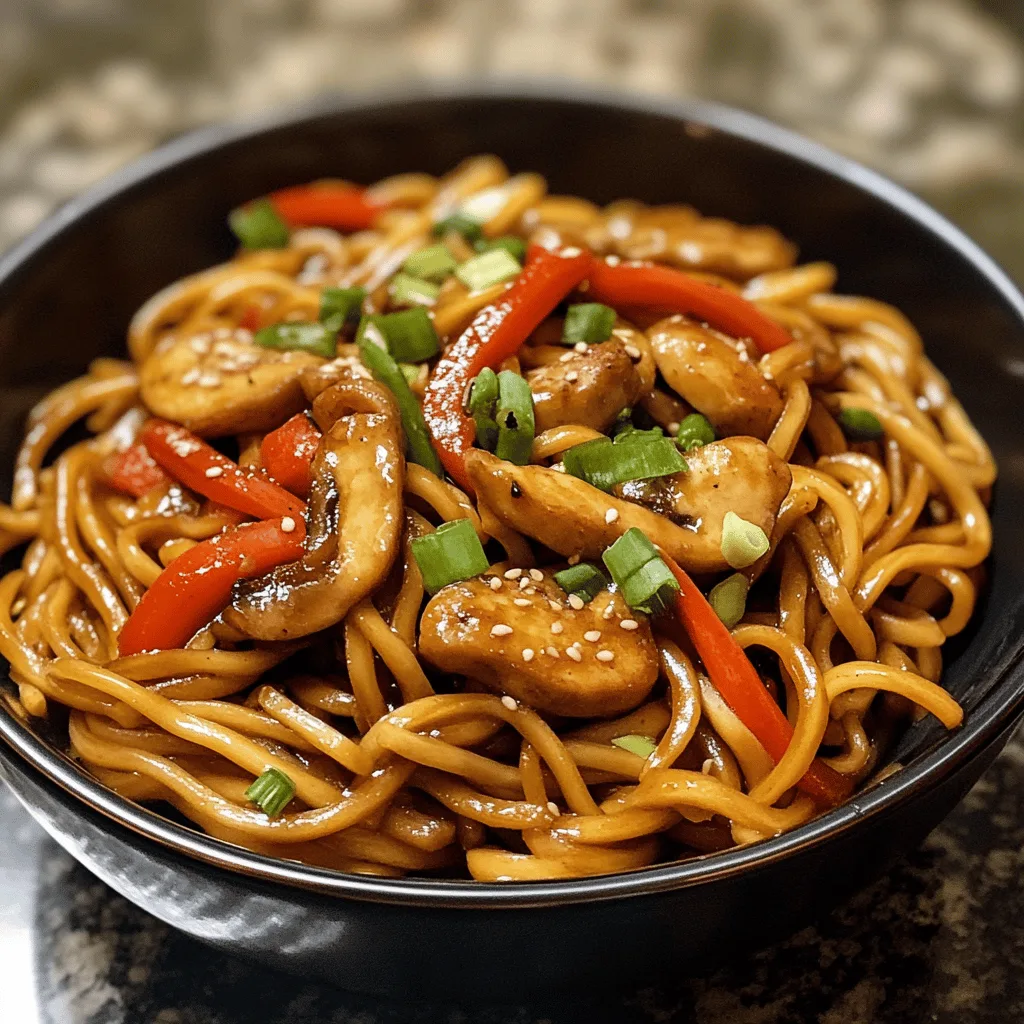
There’s something magical about a steaming plate of lo mein – those slippery noodles coated in a savory sauce, tossed with colorful vegetables and your protein of choice. While takeout is always tempting, this Easy 15-Minute Lo Mein brings that restaurant experience right to your kitchen with minimal effort.
Perfect for busy weeknights when you’re craving something comforting yet quick, this lo mein recipe delivers big flavors without the long prep time. The beauty lies in its simplicity and adaptability – you can use whatever vegetables are lurking in your crisper drawer and still end up with a delicious meal that tastes like it came from your favorite Chinese restaurant.
Why You’ll Love This
- Quick and convenient – Ready in just 15 minutes of active cooking time, perfect for busy weeknights
- Customizable – Works with any protein (chicken, beef, tofu) and whatever vegetables you have on hand
- One-pan wonder – Minimal cleanup with everything cooked in a single wok or large skillet
- Better than takeout – Fresher, healthier, and more economical than ordering delivery
- Family-friendly – Mild flavors that appeal to both adults and children, easily adjustable for heat preferences
Ingredients
- 8 oz egg noodles (dried or fresh, whatever you have on hand)
- 2 medium carrots, sliced into thin matchsticks
- 1/4 yellow onion, thinly sliced
- 3 cups cabbage, shredded (about 1/4 of a large head)
- 3 plump garlic cloves, finely chopped
- 1 bunch green onions, green parts only, chopped
- 2 tablespoons dark soy sauce
- 2 tablespoons regular soy sauce
- 2 tablespoons brown sugar (or white sugar in a pinch)
- 1 tablespoon water
- 1 teaspoon toasted sesame oil
- 1 tablespoon cornstarch
- 1/4 teaspoon white pepper
- 1 tablespoon oyster sauce
Instructions
- Grab your cutting board and slice up the onion, carrots, cabbage, garlic, and green onions. Keep them separate since they’ll go in at different times. This is a quick-cooking dish, so having everything ready to go makes life easier!
- In a small bowl, stir together the dark soy sauce, regular soy sauce, brown sugar, water, sesame oil, cornstarch, white pepper, and oyster sauce until the sugar dissolves and there aren’t any cornstarch lumps. This sauce is what makes lo mein taste like lo mein, so don’t skip any ingredients if possible!
- Bring a pot of water to a boil and cook your egg noodles for about 5 minutes (or follow package directions). Once they’re just tender, drain and rinse under cold water to stop the cooking. This keeps them from turning mushy when we stir-fry them later.
- Heat a wok or large skillet over high heat until it’s really hot. Add a splash of oil, then toss in the garlic, carrots, and onion. Let them sizzle for 2 minutes, stirring constantly. Add the cabbage and keep stir-frying for another 2 minutes until everything starts to soften but still has some crunch.
- Toss your cooked noodles into the pan along with the sauce and green onions. Keep everything moving for about a minute until the noodles are hot and completely coated in that glossy sauce. The sauce should thicken up nicely and cling to everything.
- Dish up your homemade lo mein while it’s hot! Grab some chopsticks if you’re feeling authentic, or just use a fork – no judgment here. Take a moment to admire your work before digging in – it’ll look and smell just like takeout, but fresher and tastier!
Tips & Variations
- Noodle substitutions: Can’t find lo mein noodles? Regular spaghetti, linguine, or even ramen noodles work well in this recipe.
- Vegetable options: Feel free to swap in snow peas, broccoli, bok choy, bean sprouts, or any vegetables you have on hand.
- Protein variations: This recipe works beautifully with leftover rotisserie chicken, thinly sliced steak, shrimp, or cubed tofu for a vegetarian option.
- Spice it up: Add a teaspoon of sriracha or chili oil to the sauce for a spicier version.
- Make ahead tip: Prep all vegetables and make the sauce up to 2 days ahead for an even quicker cooking time.
- Gluten-free option: Use tamari instead of soy sauce and rice noodles instead of wheat-based lo mein noodles.
Serving Suggestions
Serve your lo mein in large bowls with chopsticks for an authentic experience. For a complete meal, pair with simple sides like steamed edamame, vegetable spring rolls, or a light cucumber salad dressed with rice vinegar and a touch of sugar.
If you’re hosting a dinner party, consider setting up a DIY lo mein bar with the noodles and sauce as the base, and various toppings in separate bowls so everyone can customize their own perfect bowl.
Notes
- For best texture, don’t overcook the noodles – they’ll continue to soften when added to the hot wok.
- The key to great lo mein is a very hot wok or pan – this gives you that restaurant-quality “wok hei” or breath of the wok.
- Leftovers can be stored in an airtight container in the refrigerator for up to 3 days. Reheat in a skillet with a splash of water.
- This dish comes together very quickly once you start cooking, so have all ingredients prepped and ready before turning on the heat.
FAQs
What’s the difference between lo mein and chow mein?
Lo mein noodles are tossed with sauce after cooking, while chow mein noodles are stir-fried until crispy. Lo mein is typically saucier and softer.
Can I make this dish ahead of time?
Yes! While best served fresh, you can make it up to 2 days ahead. When reheating, add a splash of water and stir-fry until hot throughout.
Is this recipe vegan?
Not as written, as oyster sauce contains seafood. For a vegan version, substitute oyster sauce with vegetarian oyster sauce (made from mushrooms) or hoisin sauce, and use tofu as your protein.
Why are my noodles clumping together?
This usually happens when noodles sit too long after cooking. Rinse cooked noodles with cold water and toss with a small amount of oil if you’re not adding them to the wok immediately.
[recipe_card]